


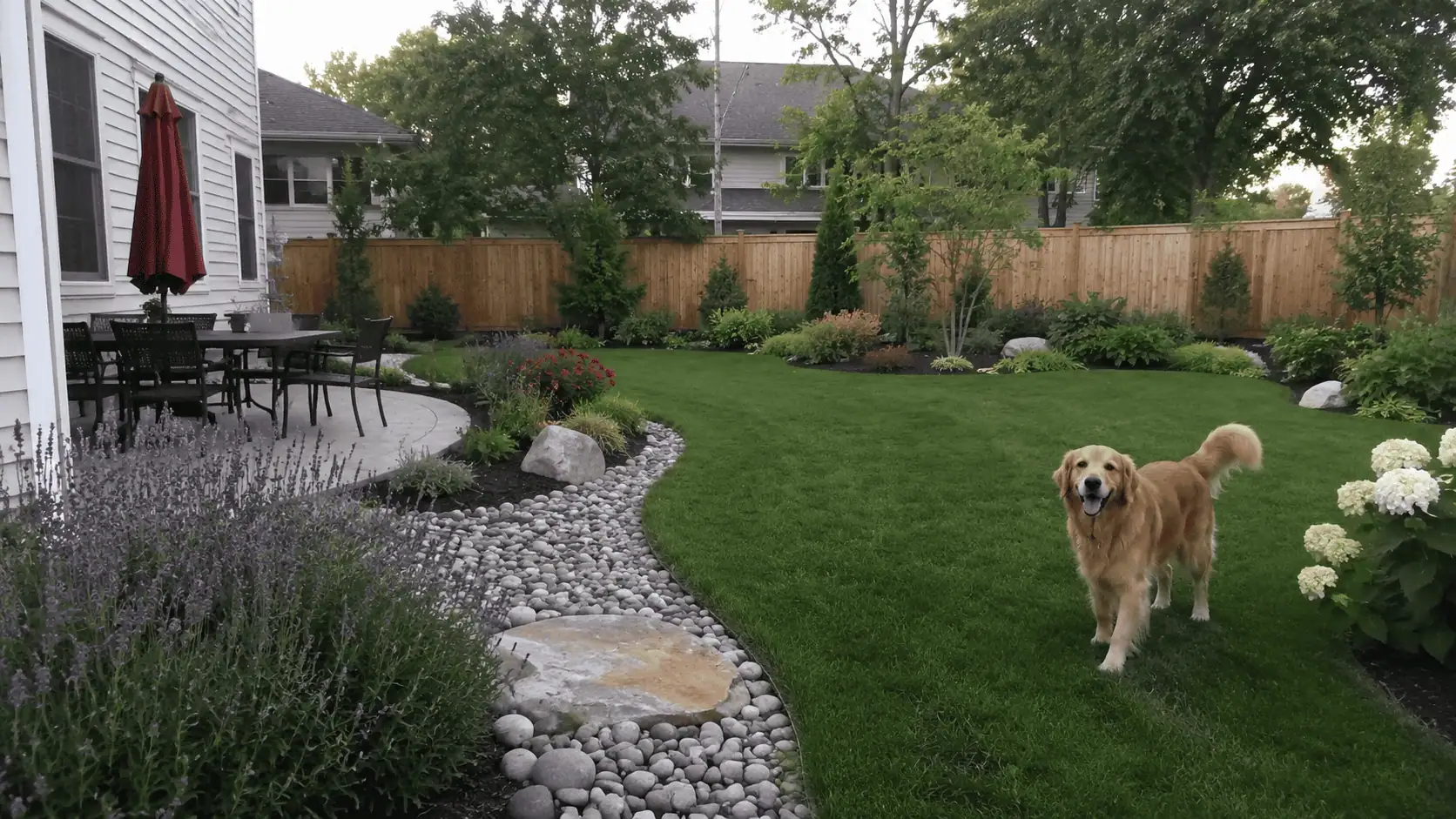
Pet friendly landscaping is really great for your yard because it helps your yard work well for your family and your dog. A good pet-friendly landscaping design gives your dog room to run around places to rest when they are tired and there are fewer muddy spots near the door where your dog usually enters. This makes pet friendly landscaping very useful, for people who have dogs.
Dogs can be hard on grass, plants, and paths. A better plan can protect the yard and make cleanup easier. This guide covers durable grass, potty zones, safe plants for dogs, running paths, shade, and smart layout ideas.
Watch How Your Dog Uses the Yard
Start by watching your dog outside.
Most dogs follow the same path every day. They run along fences. They cut across corners. They rest in shade. They use the same bathroom spot.
Those habits show where the yard needs help.
Dean’s Pools & Landscaping designs around real family life. Their team looks at pets, kids, patios, pools, soil, drainage, and daily use before planning the space.
For help with a full plan, visit their Landscaping Design Services.
Pick Grass That Can Handle Traffic
Dogs can wear out weak grass fast.
Running, digging, and potty use can leave brown spots and bare patches. Wet spring weather can make the damage worse.
Tall fescue works well in many Northwest Indiana yards. It has deeper roots than some common grasses. It can handle foot traffic better after it settles in.
Kentucky bluegrass can repair itself by spreading. A blend of tall fescue and Kentucky bluegrass can work well for many dog yards.
No lawn is dog-proof. Good soil, steady watering, and quick repairs still matter.
Add a Potty Area With Pea Gravel
A set potty area can protect the lawn.
Pea gravel works well for many dogs. It drains better than dirt. It helps cut down on mud. Use smooth gravel, not sharp stone.
Place the area in a side yard or back corner. Keep it easy for the dog to reach. Add edging so the gravel stays in place.
Rinse the area often. Good drainage below the gravel helps control odor.
A steady routine helps your dog learn the new spot.
Avoid Plants That Can Harm Dogs
Plant choice matters in a dog friendly backyard design.
Some common plants are unsafe for dogs. Avoid yew, azalea, foxglove, lily of the valley, oleander, and sago palm.
Skip cocoa mulch too. Some dogs like the smell.
Safer plant choices often include:
- Coneflower
- Black-eyed Susan
- Switchgrass
- Catmint
- Daylily
- Ornamental grasses
- Serviceberry
- Ninebark
Check each plant before adding it to a pet area. Dean’s garden center can help match safe plants to sun, soil, and yard layout.
Create Running Paths
Dogs often make their own paths.
You can see worn grass along fences, around patios, and between the door and gate. Fighting that path rarely works.
Turn it into part of the design.
Use mulch, pavers, stepping stones, or compacted gravel where your dog already runs. Keep the path wide enough for easy movement.
A loop path works well for active dogs. It gives them space to move and keeps them out of planting beds.
Protect Garden Beds
Soft soil can invite digging.
Use sturdy plants near dog traffic. Add low edging to mark the bed. Place tough shrubs near the back and softer plants in safer spots.
Raised beds can help protect plants in small yards. They lift flowers and shrubs away from paws.
Use pet-safe mulch. Avoid sharp stone in areas where dogs run or lie down.
A clean bed edge tells the dog where the path ends.
Add Shade for Hot Days
Dogs need shade during warm weather.
Trees and pergolas and covered patios and shade structures are really good, for making the yard a safer place.
If you have a shaded spot to rest near the patio it is very nice. It works well for many homes.
Keep fresh water nearby during summer. Place the bowls on a surface so they do not tip into the mulch or dirt.
Deans Pools & Landscaping can design patios, flower beds, shade areas and walkways, as one connected space.
Use Fencing and Plant Screens
A pet-friendly yard needs clear edges.
A good fence is really important because it helps keep dogs
Plants are a way to soften the fence and they also add a lot of privacy.
If your dog likes to patrol along the fence you should leave some room along the fence for your dog to walk around.
Plants placed too close may get crushed.
Use shrubs and grasses in wider beds. Keep open paths where your dog already moves.
This creates a yard that looks planned and still works for pets.
Plan Pool Areas With Care
Pools and dogs need smart design.
When you are picking plants for your yard try to choose plants that do not drop a lot of leaves or flowers or seeds or fruit. This is an idea because it means you will have less stuff to clean up from your pool.
You should also keep plants with thorns away from the paths that your dog walks on. It is an idea to use special surfaces near the water that your dog can grip well so they do not slip and fall.
If you have a corner, near your pool that’s shady you can make it a nice place for your dog to rest.
Dean’s Pools & Landscaping designs. Patios and pool decks and the beds where you plant things all together. That helps the whole space work better.
Stop Mud Near Doors
Muddy paws often start near the back door.
Dogs run through the same entry points again and again. Grass wears down. Soil turns soft after rain.
Use pavers, gravel, or a small landing area near the door. Add drainage if water sits there.
A clean entry zone helps keep the house cleaner too.
Use Tough Groundcovers in Light-Traffic Areas
Some spots will not grow thick grass.
Shade, roots, and foot traffic can thin the lawn. Groundcovers can help in areas with lighter dog traffic.
Creeping thyme, sedum, and some native sedges can work in the right places.
Heavy traffic needs a harder surface. Mulch, gravel, or pavers often last longer.
Keep Cleanup Simple
A pet-friendly yard should not create more work.
Place the potty area where cleanup is easy. Keep paths clear. Use plants that do not drop messy fruit or sharp seed pods.
Leave enough room around beds for trimming and watering.
Simple layout saves time every week.
Work With a Local Landscape Team
A good pet yard needs more than tough grass.
You need to have plants, clean paths, shade, drainage, potty space and room for daily routines.
Dean’s Pools & Landscaping has been around for more than 30 years serving Northwest Indiana. The team, at Dean’s Pools & Landscaping designs landscapes and patios and walkways and pool areas and retaining walls and outdoor kitchens and garden spaces that real families can actually use every day.
A pet friendly plan can make your yard look great and work well.
You can call (219) 864-9078 to book a free design consultation.
FAQs About Pet Friendly Landscaping
1. What is the best grass for dogs?
Tall fescue is a strong choice for many dog yards. It handles traffic better than many grasses. A tall fescue and Kentucky bluegrass blend can work well in Northwest Indiana.
2. What can I use for a dog potty area?
Pea gravel works well for many dog potty areas. It drains better than bare soil and helps reduce mud. Use smooth gravel and strong edging.
3. What plants should I avoid around dogs?
Avoid yew, azalea, foxglove, lily of the valley, oleander, and sago palm. Check plant safety before adding shrubs or flowers to pet areas.
4. How do I stop my dog from ruining the lawn?
5. What are safe plants for dogs?
Many homeowners use coneflower, black-eyed Susan, switchgrass, catmint, daylily, and ornamental grasses. Check each plant before planting.
6. Can Dean’s Pools & Landscaping design a dog friendly backyard?
Yes. Dean’s Pools & Landscaping can design dog friendly backyard spaces with paths, patios, grass areas, safe plants, drainage, and poolside planting.
